


-
Yaghsha Dawar
-
Apr 27, 2026, 12:00:00 AM
Scaling a sales team sounds straightforward; hire more SDRs, increase outreach, and grow the pipeline.
But in reality, without the right structure behind the scenes, growth can quickly turn into confusion. That’s exactly the challenge Composite GP, a Philippines-based B2B services company, was facing. While their marketing efforts were already running through HubSpot, their sales operations were spread across multiple tools, making it difficult to track opportunities, maintain consistency, and give managers clear visibility into performance.
They didn’t need more activity; they needed a system.
The Challenge: Activity Without Structure
Composite GP had a growing SDR team and strong sales intent, but their processes weren’t fully connected. Sales reps were managing tasks across different platforms, which made it hard to get a clear picture of what was happening across the funnel. There was no single place to track deals, measure performance, or identify bottlenecks.
A few key issues stood out:
- No centralised system for tracking sales activity and opportunities
- Limited structure around qualification and follow-ups
- Manual processes for renewals and internal notifications
- Lack of alignment between marketing data and sales execution
- Low confidence among the sales team in using HubSpot effectively
For managers, this meant limited visibility. For SDRs, it meant inconsistency. And for the business, it meant missed opportunities to scale efficiently.
The Goal: Build a Scalable Sales Engine Inside HubSpot

Composite GP didn’t want a patchwork solution; they wanted a clean, scalable system that could support a growing SDR team.
Success meant:
- Bringing all sales activity into HubSpot
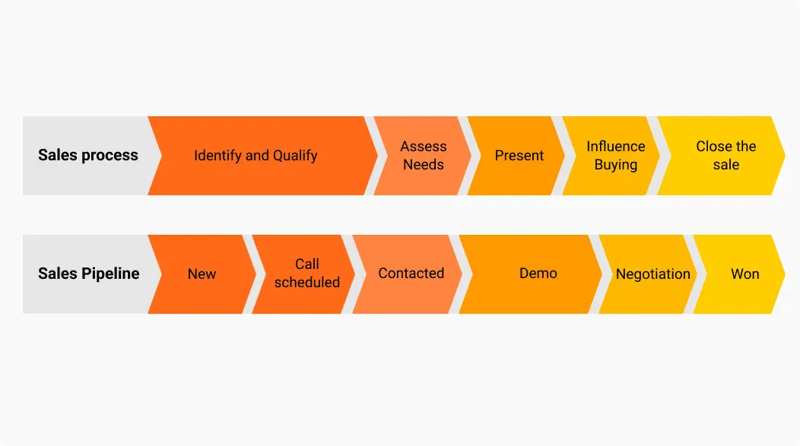
- Designing a structured pipeline aligned with their qualification process
- Improving visibility into deals, pipeline health, and team performance
- Automating repetitive processes like renewals and follow-ups
- Aligning marketing and sales into one shared system
- Building internal confidence in using HubSpot daily
In short, they needed a HubSpot Sales Hub setup that actually worked for their team — not against it.
Also read: How Businesses Use HubSpot to Recover Lost Revenue: A Real Client Case Study
Our Approach: Structure First, Then Scale
At Team CloudSource, we approach sales systems with one principle in mind: your CRM should reflect how your team actually sells. Instead of forcing Composite GP into a generic pipeline, we customised HubSpot to match their real sales process, from qualification to closing.
We also knew that with a team of 15–20 SDRs, automation wasn’t optional. It was essential. Alongside system design, we focused heavily on enablement, ensuring the team understood not just what to do in HubSpot but why it mattered.
Implementation: Building Custom Pipelines That Work
We implemented HubSpot Sales Hub Professional and built a structured foundation for the entire sales function.- At the core of this was a set of customised sales pipelines designed specifically for opportunity management. These pipelines gave SDRs and managers a clear, shared view of where every deal stood.
- To improve qualification and consistency, we created custom CRM properties to capture key data from sales conversations, ensuring that every lead was evaluated using the same criteria.
We built workflows to:
- Notify sales and accounting teams when renewals are approaching
- Alert managers when deals have stalled or gone cold
- Support follow-ups and ensure no opportunities slip through the cracks
We also introduced lead segmentation and workflows that connected marketing activity directly to sales pipelines, closing the gap between lead generation and conversion.
Finally, we delivered hands-on training sessions for both the sales and marketing teams, followed by refresher sessions to reinforce adoption and confidence.
Visibility, Consistency, and Confidence
- With everything centralised in HubSpot, Composite GP’s sales operations became significantly more structured and transparent.
- Managers gained real-time visibility into pipeline health, making it easier to forecast, coach, and optimise performance.
- SDRs now had a clear process to follow, from first contact to deal progression, which improved consistency across the team.
- Automation reduced the need for manual coordination, especially around renewals and follow-ups, allowing the team to focus more on selling and less on admin.
- Perhaps most importantly, confidence in HubSpot increased across the organisation. What was once an underutilised tool became a central part of daily sales execution.
Why It Worked
This wasn’t just a CRM setup; it was a shift in how the sales team operated.
By aligning HubSpot with Composite GP’s real sales process, introducing thoughtful automation, and investing in team training, we created a system that was both scalable and easy to adopt.
As one of their team members shared:
“Team CloudSource, especially Jameel, has been wonderful to work with… His support in customising our sales pipelines made it much easier to manage and track opportunities. While we’re still building confidence, we feel we’re on the right track thanks to his guidance.”
Final Thoughts
For B2B teams already using HubSpot for marketing, the next step is often unlocking its full potential for sales. With the right structure, pipelines, and automation in place, HubSpot becomes more than just a CRM; it becomes a scalable sales engine. If your sales team is growing but your processes aren’t keeping up, it might be time to rethink how your pipelines are built. Get in touch for personalised solutions.