


-
Ali Razzak
-
Apr 6, 2026 12:00:00 AM
You hit your sales targets. Your team is trying really hard. The invoices are going out. So why does the bank balance never quite look the way it should? Here's the truth: according to a study by MGI Research, businesses lose between 1% and 5% of annual revenue to billing errors and revenue leakage alone. When you factor in operational inefficiencies, contract mismanagement, and unchecked subscriptions, that number reaches a jaw-dropping 5–15% of total revenue, silently, consistently, year after year. For a company earning $2 million annually, that's up to $300,000 walking out the door unnoticed.
The problem isn't always bad sales or a weak market. Sometimes, the enemy is inside the house. Revenue leakage in business is one of the most underestimated financial threats facing companies today, and the scariest part is that most business owners don't know it's happening until the damage is already done.
Let's change that.
What Is Revenue Leakage in Business?
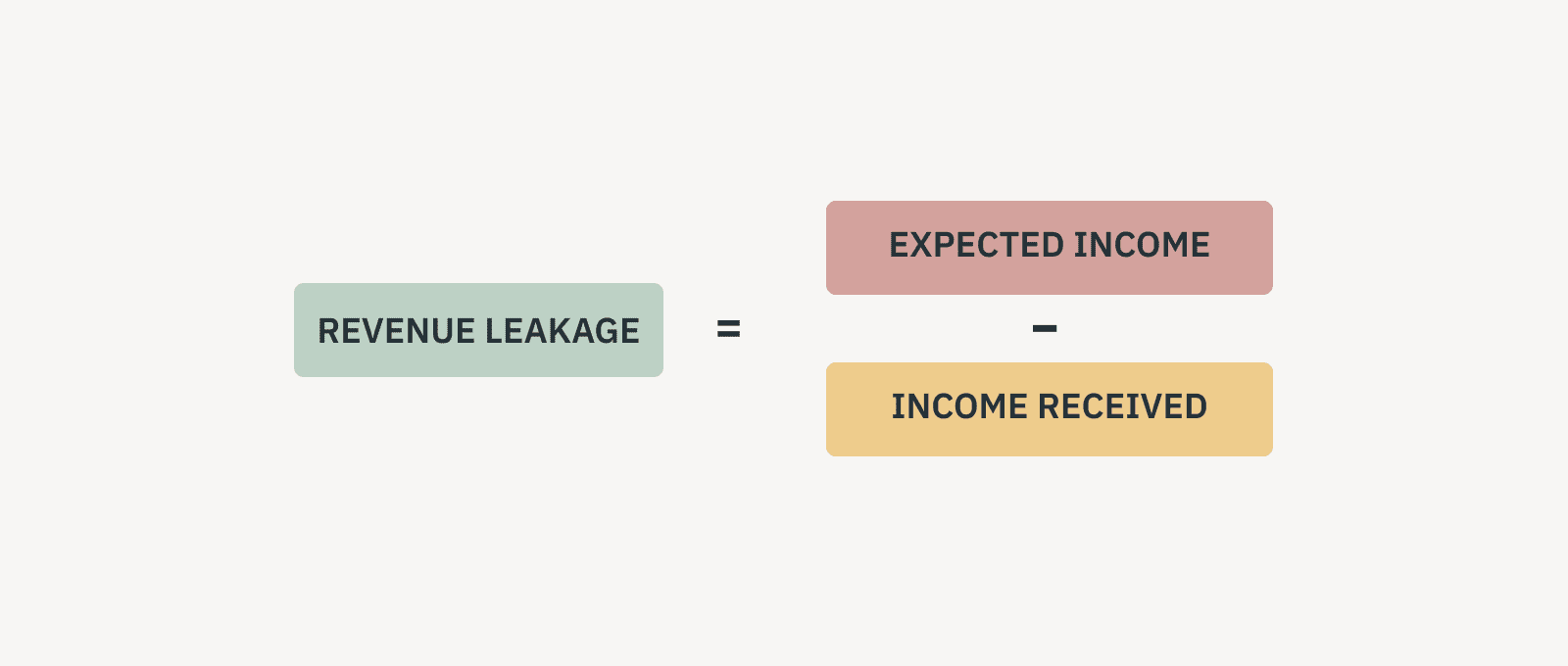
Revenue leakage in business refers to the gradual loss of income or increase in costs that erodes profitability without an obvious, single cause. Unlike a bad quarter or a lost client, revenue leakage is slow, quiet, and systemic.
Think of it like a leaky pipe in your walls. The structure looks fine from the outside. But over time, the water damage compounds until one day you're dealing with a much bigger, more expensive problem.
Revenue leakage can stem from:
Unbilled work or servicesPricing errors and discount mismanagement
Duplicate or zombie software subscriptions
Poor contract management
Manual process errors
Underperforming vendor contracts
Inefficient employee time tracking
The result? A business that appears to be functioning normally, but is significantly less profitable than it should be.
Revenue Leakage from Sales Process: Missed Follow-ups, Lead Decay & How to Plug Them
The Most Common Hidden Costs in Business (And Why They're So Easy to Miss)
1. Billing and Invoicing Errors
One of the most common and embarrassing causes of revenue leakage in business is simple billing mistakes. Services get delivered but are never invoiced. Discounts get applied manually and never removed. A recurring invoice goes to an old email address and never gets paid.
A report found that over 60% of small businesses experience late payments, many of which begin with invoicing errors or disputes. The fix? Automating your billing system and building in a monthly reconciliation process.
2. Unmanaged or Forgotten Subscriptions
Between your CRM, project management tool, design platform, analytics suite, email marketing software, and that one app someone signed up for during a trial, your SaaS stack is likely much bigger than you think. A quarterly software audit is one of the simplest cost control strategies for businesses and one of the highest-ROI tasks a finance team can undertake.
3. Poor Contract Management
Contracts are where revenue is supposed to be protected, but for many businesses, they're where it quietly escapes. Poor contract management is one of the most significant yet overlooked causes of revenue leakage. Expired contracts that auto-renew at unfavourable rates. Missed performance penalties that vendors should have paid. Service agreements where scope creep never got billed.
Implementing a proper contract lifecycle management (CLM) system and actually reviewing contracts before renewal dates are among the most effective ways to use contract management to avoid revenue leakage.
4. Pricing Inconsistencies and Unauthorised Discounts
Sales teams are great at closing deals. They're not always great at sticking to the pricing sheet. Unauthorised discounts, custom rates that never got formalised, and tiered pricing that wasn't properly communicated to billing- these all create gaps between what a business should earn and what it actually collects.
5. Overstaffing or Misaligned Resource Allocation
Are you paying full-time salaries for work that could be done more efficiently, or paying premium contractor rates for tasks that could be systematised? Labour is often the highest cost in a business, and it's also the most emotionally complicated to audit. But a resource audit is non-negotiable if you want to stop business cost leakage examples from piling up in your P&L.
6. Operational Inefficiencies and Rework
Manual processes, redundant workflows, and poor communication between teams don't just slow a business down; they cost real money. Every hour spent on rework, double data entry, or chasing approvals is an hour not spent generating revenue.
How to Audit Hidden Business Expenses: A Practical Checklist
Knowing you have a problem is step one. Fixing it requires a structured financial audit for revenue leakage. Here's how to approach it:
Step 1 — Pull every recurring expense. Start with your bank statements and credit card records for the last 12 months. List every recurring charge. Categorise it. Ask: Do we still use this? Is it generating value?
Step 2 — Audit your invoicing process. Cross-reference every project or service delivered against invoices sent. Are there gaps? Delays? Disputes sitting unresolved?
Step 3 — Review all active contracts. Create a contract register if you don't have one. Note renewal dates, SLAs, penalty clauses, and pricing terms. Flag anything due to renew in the next 90 days.
Step 4 — Examine your pricing and discounting practices. Pull your last 50 invoices and compare them against your standard pricing. Spot the outliers and understand why they exist.
Step 5 — Map your operational workflows. Identify the top five most time-consuming processes in your business. Ask whether each step adds value or creates friction. Calculate the true cost in staff hours.
Step 6 — Run a vendor performance review. Are your suppliers delivering what was promised? Are SLAs being met? If not, are you collecting on penalty clauses or simply absorbing the loss?
Step 7 — Benchmark your results. Compare your cost-to-revenue ratios against industry benchmarks. If you're significantly above average, you've found your next area to investigate.
This business financial audit checklist won't solve everything overnight, but it gives you a clear starting point and a repeatable system for catching leaks before they compound.
The Anatomy of Revenue Leakage in Subscription Models — 7 Pitfalls & Fixes
How to Find Hidden Costs in Business: The Mindset Shift
One of the reasons revenue loss in companies goes unaddressed for so long is cultural. No one wants to be the person who flags a problem that implies someone else made a mistake. But a healthy business treats cost auditing as routine maintenance, not a blame exercise.
The most financially resilient companies build revenue protection into their operating rhythm. They don't just run a financial audit when something goes wrong. They schedule quarterly reviews, assign ownership to each cost category, and track metrics like cost-per-revenue-dollar over time.
When you treat "how to audit business expenses" as a regular management practice rather than a crisis response, the savings compound quickly.
How Team CloudSource Can Help You Stop the Leak
If you're serious about getting your revenue operations in order, Team CloudSource is a certified Diamond HubSpot Solution Partner that helps businesses build the systems and processes needed to eliminate revenue leakage at its root.
We specialise in HubSpot RevOps services, CRM implementation, sales process optimisation, and inbound marketing strategy, all areas directly tied to how cleanly a business captures, tracks, and retains revenue. Whether you need help auditing your HubSpot setup, aligning your sales and marketing pipelines, or building a reporting infrastructure that surfaces leakage in real time, we bring both the technical expertise and the strategic perspective to make it happen.
Think of us as the partner who helps you stop guessing where your revenue is going, and start seeing it clearly.
FAQs: Revenue Leakage in Business
What is revenue leakage in business?
Revenue leakage in business refers to the loss of income or excess spending that reduces profitability without a single obvious cause.
How much revenue do businesses typically lose to leakage?
Studies suggest that businesses lose between 5% and 15% of annual revenue to various forms of leakage.
What are the most common causes of revenue leakage?
The most common causes include: billing and invoicing errors, forgotten SaaS subscriptions, poor contract management, inefficient workflows, and misaligned resource allocation.
How do I conduct a financial audit for revenue leakage?
Start by reviewing all recurring expenses, cross-referencing invoices against delivered work, auditing contracts, and mapping your most time-consuming workflows.
Can contract management really prevent revenue leakage?
Using contract management to avoid revenue leakage means actively tracking renewal dates, penalty clauses, and scope, rather than filing contracts away and forgetting them.
Final Thoughts
Revenue leakage in business doesn't announce itself. It accumulates quietly, one unbilled hour, one forgotten subscription, one expired contract at a time. By the time most businesses notice the damage, months or years of avoidable losses have already stacked up.
The good news? It's fixable. A structured approach to auditing hidden business expenses, combined with better systems for contract management, pricing governance, and operational efficiency, can recover a meaningful portion of that lost revenue, often without a single additional sale.
Start with the checklist. Build the habit. And if you need a partner to help you build the systems that keep your revenue where it belongs, contact us now, as we’ll help you get there.