

-
Ali Razzak
-
Jun 8, 2026, 12:00:00 AM
Revenue leakage is one of the most overlooked challenges organisations face. While companies focus heavily on increasing sales and acquiring new customers, many fail to recognise how much revenue is lost due to manual processes, human error, workflow delays, and inefficient operations.
Manual revenue losses can occur across departments, from sales and finance to customer service and operations. Small mistakes such as missed invoices, incorrect pricing, duplicate data entries, delayed follow-ups, or contract renewal oversights can collectively result in substantial financial losses over time.
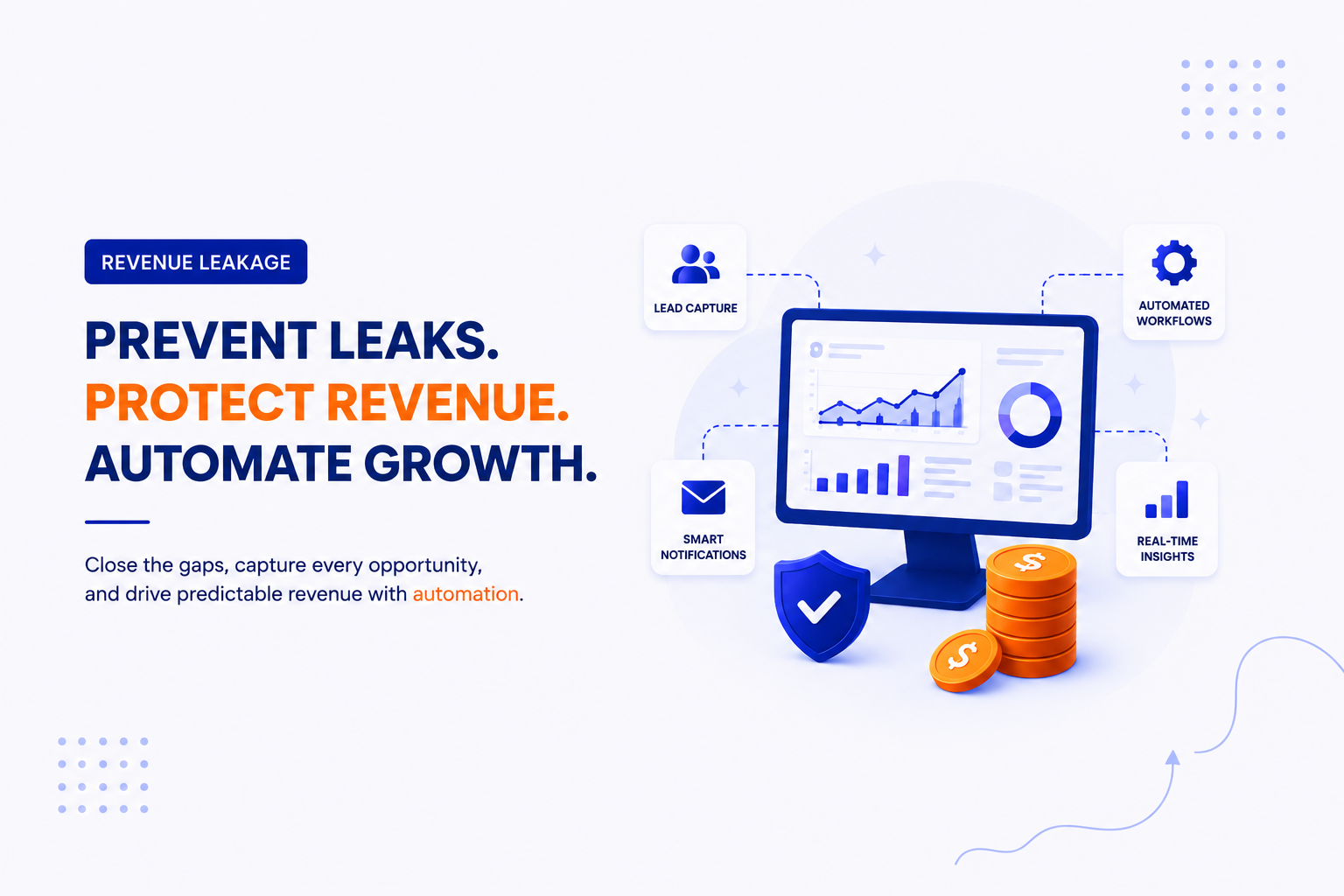
This is where automation becomes a game-changer. By automating repetitive tasks, standardising workflows, and reducing human intervention, businesses can significantly minimise revenue leakage while improving efficiency and customer satisfaction.
In this article, we'll explore the role of Revenue Leakage Prevention Through Automation , its key benefits, and how organisations can implement automation effectively.
Understanding Manual Revenue Losses

Manual revenue losses are financial losses resulting from human-dependent processes prone to errors, delays, and inconsistencies.
Some common examples include:
- Missed customer invoices
- Incorrect billing amounts
- Untracked contract renewals
- Delayed payment collections
- Pricing inconsistencies
- Duplicate records in CRM systems
- Lost sales opportunities due to delayed follow-ups
- Inventory management errors
- Data entry mistakes
While each error may seem minor individually, the cumulative impact can significantly affect profitability and operational efficiency.
According to industry studies, businesses can lose between 1% and 5% of annual revenue due to operational inefficiencies and revenue leakage. For growing companies, this can translate into hundreds of thousands of dollars, or even millions, annually.
How Businesses Lose 5–15% Revenue Without Realising It: Hidden Costs & How to Audit Them
Why Manual Processes Create Revenue Risks
Manual workflows rely heavily on employees to perform repetitive tasks accurately and consistently. As organisations grow, the volume of transactions and customer interactions increases, making it difficult to maintain accuracy through manual efforts alone.
Some of the primary causes of revenue loss include:
Human Error
People naturally make mistakes, especially when handling large amounts of data. Errors in pricing, invoicing, data entry, or reporting can directly impact revenue collection.
Delayed Actions
Manual processes often depend on individual availability. Delays in sending invoices, approving contracts, or following up with prospects can slow down cash flow and reduce conversion rates.
Lack of Visibility
Manual systems frequently operate in silos. Teams may not have real-time access to customer data, sales performance, or billing status, leading to missed opportunities and revenue gaps.
Inconsistent Processes
Without standardised workflows, employees may perform tasks differently, resulting in inconsistent outcomes and an increased risk of errors.
Scalability Challenges
As business operations expand, manual processes become increasingly difficult to manage, creating bottlenecks that affect revenue generation and customer experience.
How Automation Prevents Revenue Leakage
Automation helps businesses eliminate repetitive manual work while ensuring consistency, accuracy, and efficiency across operations.
Let's explore the key ways automation prevents revenue losses.
1. Automated Invoicing and Billing
One of the most common sources of revenue leakage is billing errors and delayed invoicing.
Automated billing systems can:
- Generate invoices instantly
- Apply accurate pricing automatically
- Schedule recurring invoices
- Send payment reminders
- Track payment status in real time
This reduces the risk of missed invoices and accelerates cash collection.
For subscription-based businesses, automated billing ensures customers are charged correctly and on time, reducing lost revenue from forgotten renewals or manual mistakes.
2. Automated Sales Follow-Ups
Many sales opportunities are lost simply because prospects are not contacted at the right time.
Sales automation platforms can:
- Trigger follow-up emails automatically
- Assign leads to sales representatives
- Schedule reminders
- Score leads based on engagement
- Track customer interactions
By ensuring no lead falls through the cracks, businesses can increase conversion rates and maximise revenue opportunities.
3. Contract and Renewal Management
Contract renewals represent a significant revenue source for many organisations. However, manual tracking often results in missed renewal dates.
Automation tools can:
- Monitor contract expiration dates
- Send renewal notifications
- Generate renewal documents
- Alert account managers
This proactive approach helps retain customers and secure recurring revenue.
4. CRM Automation
Customer relationship management systems are essential for maintaining accurate customer data.
Automated CRM workflows can:
- Eliminate duplicate records
- Update customer information automatically
- Track communication history
- Trigger customer engagement campaigns
Accurate data improves sales forecasting and reduces revenue losses caused by poor customer management.
5. Automated Payment Collection
Late payments can create cash flow challenges and increase administrative costs.
Automation helps by:
- Sending payment reminders
- Offering self-service payment options
- Processing recurring payments
- Tracking outstanding balances
Businesses can improve collection rates while reducing the workload on finance teams.
6. Inventory and Order Automation
Inventory discrepancies often lead to lost sales and dissatisfied customers.
Automated inventory management systems provide:
- Real-time stock visibility
- Automatic reorder alerts
- Inventory forecasting
- Order tracking
This reduces stockouts, overstocking, and order fulfilment errors that can negatively impact revenue.
Key Benefits of Revenue Protection Through Automation

1. Increased Accuracy
Automation significantly reduces human errors by ensuring processes follow predefined rules and workflows.
2. Faster Operations
Tasks that once took hours can now be completed in seconds, improving productivity and customer response times.
3. Improved Customer Experience
Customers receive faster responses, accurate invoices, timely updates, and seamless service, leading to higher satisfaction and retention.
4. Better Compliance
Automated systems maintain detailed records and audit trails, helping organisations meet regulatory and financial compliance requirements.
5. Enhanced Visibility
Real-time dashboards and reporting provide leadership teams with valuable insights into revenue performance and operational health.
6. Greater Scalability
Businesses can manage larger transaction volumes without increasing administrative overhead, enabling sustainable growth.
The Anatomy of Revenue Leakage in Subscription Models — 7 Pitfalls & Fixes
Departments That Benefit Most from Automation
-
1. Sales Teams
Sales automation improves lead management, pipeline tracking, and customer engagement.
-
2. Finance Teams
Automated billing, invoicing, reconciliation, and payment collection reduce financial errors and improve cash flow.
-
3. Customer Success Teams
Automated onboarding, support workflows, and renewal reminders strengthen customer retention.
-
4. Operations Teams
Workflow automation eliminates inefficiencies and improves overall business performance.
-
5. Executive Leadership
Real-time reporting and analytics enable better decision-making and more accurate revenue forecasting.
Best Practices for Implementing Revenue Automation
Identify Revenue Leakage Points
Start by analysing current processes to identify areas where errors, delays, or inefficiencies occur most frequently.
-
1. Prioritise High-Impact Processes
Focus on automating workflows that directly affect revenue generation and collection, such as invoicing, lead management, and contract renewals.
-
2. Integrate Existing Systems
Ensure automation tools connect seamlessly with CRM, ERP, accounting, and payment platforms.
-
3. Establish Clear Workflows
Document processes and define automation rules to maintain consistency across teams.
-
4. Monitor Performance Metrics
Track key performance indicators such as:
- Invoice accuracy
- Payment collection rates
- Customer retention
- Lead conversion rates
- Revenue recovery
Regular monitoring helps optimise automation strategies over time.
-
5. Train Employees
Successful automation requires employee adoption. Provide training to help teams understand how automation improves efficiency and supports business goals.
The Future of Revenue Protection Through Automation
The future of Revenue Leakage Prevention Through Automation is increasingly driven by artificial intelligence and machine learning. Modern platforms can now predict revenue risks before they occur, identify customer churn signals, and recommend proactive actions.
Advanced automation solutions are capable of:
- Predicting payment delays
- Forecasting revenue trends
- Identifying sales opportunities
- Detecting billing anomalies
- Personalising customer engagement
As technology continues to evolve, businesses that embrace automation will gain a significant competitive advantage by protecting revenue and improving operational efficiency.
How Team CloudSource Helps Businesses Prevent Revenue Losses
At Team CloudSource, we help businesses eliminate manual revenue losses through intelligent automation and optimised digital workflows. Our experts implement CRM automation, automated billing systems, lead-nurturing workflows, contract renewal tracking, HubSpot Implementation and revenue-focused reporting using business tools. By identifying process gaps, reducing human error, and creating seamless, automated customer journeys, we help organisations improve operational efficiency, protect recurring revenue, and build scalable systems that support long-term growth.
Conclusion
Manual revenue losses are often hidden within everyday business operations, but their impact can be substantial. Human errors, delayed processes, missed opportunities, and inefficient workflows can quietly erode profitability over time.
Revenue Leakage Prevention Through Automation provides a powerful solution by streamlining processes, reducing errors, improving visibility, and ensuring critical revenue-generating activities are executed consistently.
From automated invoicing and payment collection to CRM management and contract renewals, automation helps organisations eliminate revenue leakage and create more efficient, scalable operations.
Businesses that invest in automation are not only protecting existing revenue but also building a stronger foundation for long-term growth, customer satisfaction, and operational excellence. Team CloudSource will host a webinar on July 30, 2026, where we'll walk you through the 3 most common revenue leaks hidden in HubSpot and the exact fixes our APAC clients use to close them. Whether you're new to HubSpot or already running it, you'll leave with a clear, actionable framework to tighten sales and marketing alignment. Hurry up and reserve your spot!
Contact us now to know more!
Frequently Asked Questions
1. What are manual revenue losses?
Manual revenue losses occur when businesses lose income due to human error, process delays, missed invoices, poor data management, or operational inefficiencies.
2. How does automation reduce revenue leakage?
Automation eliminates repetitive manual tasks, improves accuracy, accelerates workflows, and ensures that critical processes, such as billing and follow-ups, occur consistently.
3. Which business processes should be automated first?
Organisations should prioritise workflows for invoicing, payment collection, lead management, contract renewals, and customer relationship management.
4. Can small businesses benefit from automation?
Yes. Small businesses often experience significant efficiency gains and cost savings by automating routine tasks and reducing manual errors.
5. What is the biggest advantage of automation for revenue protection?
The biggest advantage is reducing human error while ensuring revenue-generating processes operate consistently, accurately, and at scale.